By: Heejae Lim, Founder and CEO
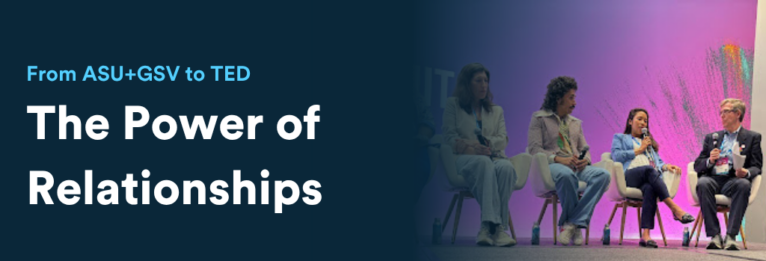
Earlier this month, I spent time at the ASU+GSV Summit in San Diego and at TED in Vancouver. While these are two very different gatherings, there was a common thread throughout both: technology is powerful, but what really matters is whether it deepens or dilutes human connection.
At ASU+GSV, Isabelle Hau spoke about how relationships are the foundation of human development. That stuck with me. Especially right now, as AI reshapes education, there is a real risk that we start to replace human connection with technology.
At TalkingPoints, we believe that intentional and purposeful connections drive outcomes. When schools and families build strong, intentional partnerships, children are twice as likely to succeed. But the education system has never been able to do this at scale. Instead, schools and families are left to navigate disconnected tools, inconsistent communication, language barriers, and more, while trying to piece together the full picture of a child’s learning.
 This is where technology can actually help. When used well, it removes barriers and makes it possible for educators to reach more families in ways that are personal, timely, and useful. And families have the information and guidance they need to actively support their child’s learning.
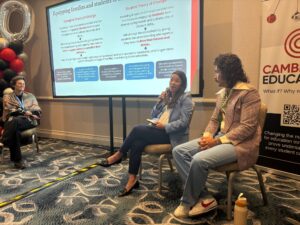
In the panels I spoke on at ASU+GSV, the rooms were full. Educators, funders, and entrepreneurs showed up because, like us, they believe that strong family-school partnerships can transform student outcomes. Yet, in practice, this is still treated as a nice-to-have. Something to layer on after curriculum, instruction, and technology decisions have already been made. That’s backward.
Families shape most of a child’s experience. If we’re serious about improving outcomes like attendance, literacy, and math, we can’t keep them on the sidelines. They have to be built into the core of how the education system works, not treated as occasional participants in conferences or school events.

TEDs theme this year, “ All of Us”, reinforced that same idea. The conversations about AI weren’t just about automation and efficiency, they were about how technology can help us show up for each other in better ways. We are stronger as a society when we use technology to act together and build the future we want to see.
We see this everyday in our work. We see technology helping educators and families connect in authentic and meaningful ways. And we see students thriving because of it.
I left both conferences feeling hopeful. We have powerful tools that can change how we connect with each other. We can shape a future that brings us closer together and helps all children thrive.